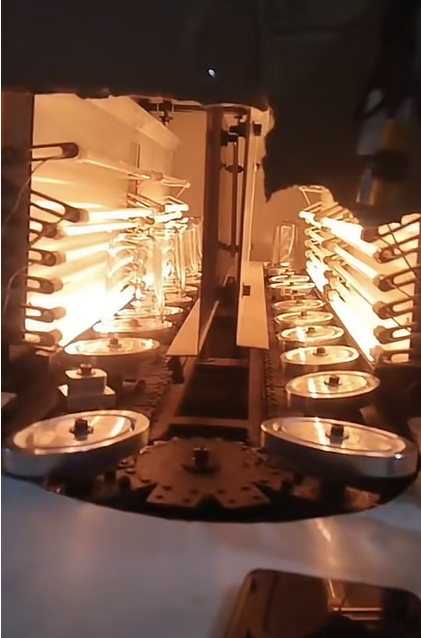
On the blow molding floor, the heating tunnel is the bottleneck you can’t afford to eyeball. When preform temperature starts drifting, you see it immediately—stretch marks, wall thinning, rejects piling up. Traditional convection is slow, fights ambient drafts, and bleeds energy. Infrared radiation hits the preform directly, heating the PET in seconds, not minutes.
What matters, technically
We build short-wave infrared emitters around a quartz tube and a halogen lamp filament, giving fast-response heat with tight spectral control. The output is tuned to PET absorption, so the energy goes into the material, not the air around it. Standard specs are 2400 W to 3600 W per emitter, 230 V or 400 V options, and R7s connectors for a drop-in fit. The heating zone footprint stays compact, so you can swap in new elements without reworking the tunnel geometry. Response is near-instant: power on, heat on. Cycle stability improves because temperature recovers quickly between shots.
Why it works in stretch blow molding
In stretch blow molding, the preform needs a narrow, repeatable temperature window across the neck, shoulder, and body. Infrared gives you that control with direct line-of-sight energy, shortening preheat and smoothing the heating curve. Bottle weight comes in more consistent, pinholes drop, and it clears the way to higher cavitation. Energy use falls because you’re heating targets, not air. Emitter life stretches out typical replacement intervals, which means less downtime and fewer spares on the shelf.
The practical details
Installation is straightforward, but alignment is everything. Keep reflectors clean and positioned right to avoid hot and cold bands. Infrared emitters don’t like ambient dust and moisture, so keep the tunnel sealed and the lens surface maintained. Confirm the lamp wattage matches your blow molder’s OEM heating profile. Overpower a zone and you scorch PET. Underpower it and the machine will slow down to compensate. Match the voltage, mounting, and connector, and the swap is quick.