
Keeping Your Oven Temps Steady (Without the Headache)
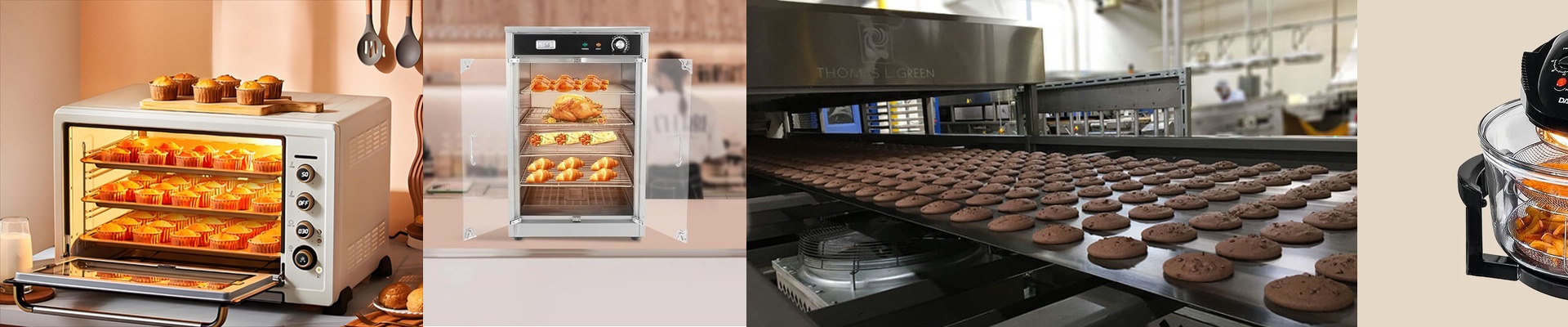
Anyone who’s spent time in a professional bakery knows the struggle. You open the oven door, a blast of cold air hits, and suddenly your temperature drops. Or you slide in a massive tray of cold dough and the whole system takes a dive. It’s frustrating, and if you aren’t careful, it ruins the bake. That’s why we use shortwave halogen infrared lamps. When you pair them with a real-time controller, they basically act like a safety net for your temperature. Why halogen? Most heaters rely on convection—basically moving hot air around—which takes forever. Halogen is different. It shoots infrared radiation straight into the product. These bulbs have very little “thermal mass,” which is a fancy way of saying they don’t hold onto heat. They heat up and cool down almost instantly. The second your sensor notices a dip in temp, the controller kicks the voltage up, the filament glows brighter, and the heat spikes immediately to fix the gap. It’s fast. Really fast. The nitty-gritty on the hardware If you’re looking at replacement bulbs, you’ll notice they have a quartz envelope. That’s there to handle the intense internal pressure. You’ll usually see R7s or similar snap-in connectors. **Pro tip:**Make sure those connectors are tight. If they’re loose, you’ll get arcing, and you’ll end up burning out the socket. Not a fun way to spend a Tuesday. One thing to keep in mind: these lamps pack a punch. If you cram too many high-wattage tubes into a tiny oven without enough ventilation, you risk cooking your own control electronics. Just make sure your airflow can handle the heat output. Keeping things running smoothly These are designed to be simple drop-in replacements. But here is the secret to making them actually work:keep your sensors clean. Kitchens are greasy. If gunk builds up on the lens, the sensor gets “blind” and thinks the oven is colder than it actually is. The system will overcompensate, and before you know it, you’ve scorched the crust on your best batch. The only real downside? The filament takes a beating. Because these lamps are constantly clicking on and off to keep a tight temperature window, the tungsten gets stressed. I’d suggest checking your bulbs every few months. It’s much better to swap a lamp during a slow morning than to have one pop in the middle of a huge production run.