
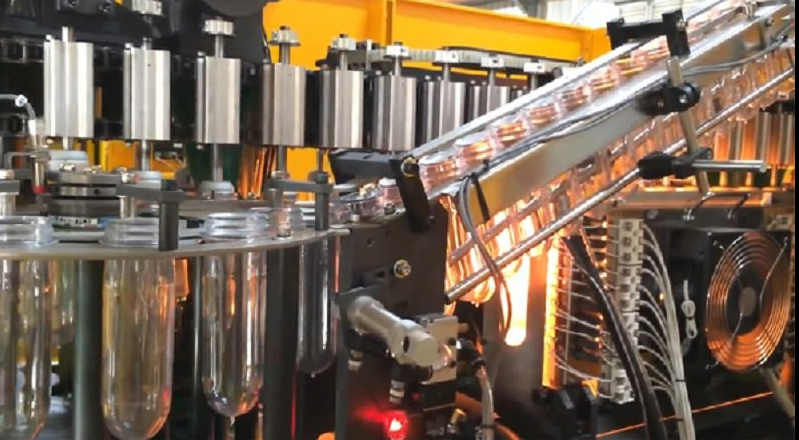
Getting Your Heat Profiles Right in PET Blow Molding
If you’re running Sidel Matrix B2B or Krones Contiform lines, you know that getting the preform temperature just right is everything. It all comes down to how your infrared (IR) lamps are performing. But here’s the problem: OEM lamp costs can be a total nightmare. You want a replacement that just works—something that drops right in, matches the original wattage, and keeps your bottle walls thick and consistent without breaking the bank.
The Deal with High-Wattage IR Tubes
These systems use short-wave infrared to punch through the PET. We build these lamps with high voltage and wattage because you need that heat density if you want to keep your cycles fast. It’s a bit of a balancing act, though. Higher wattage means you hit your temperature faster, but it puts a lot of stress on the quartz. If your power supply is jumping around, those tubes are going to burn out way too soon. My advice? Double-check your voltage regulators. Make sure they’re tuned exactly to the lamp’s rating, or you’ll be replacing filaments a lot more often than you’d like.
Quartz and Connectors (The Boring but Important Stuff)
We use high-purity quartz glass for a reason. These lamps go from freezing to scorching in seconds, and cheap glass just can’t handle that kind of thermal shock. As for the plugs, we stick with R7s or Sk15 connectors. They’re the industry standard because they actually stay put and don’t fight the electricity. **Watch out for loose sockets.**A shaky connection creates a hotspot. Before you know it, you’ve got a melted housing or a nasty arc at the terminal. Not a great way to start a shift.
Making it All Work Together
The goal here is to make maintenance a non-event. Our lamps fit the same footprint as the OEM parts, so you don’t have to mess around with your oven racks. Just swap them and go. But a word of caution: if you crank up the heat density to push more bottles through the line, your ventilation has to keep up. If the airflow isn’t stripping the extra heat off the oven walls, you’ll start seeing “pearling” or overheating around the neck of the preform. It’s frustrating to see. Just keep an eye on the balance between your lamp power and your blower settings, and you’ll keep the process smooth.